
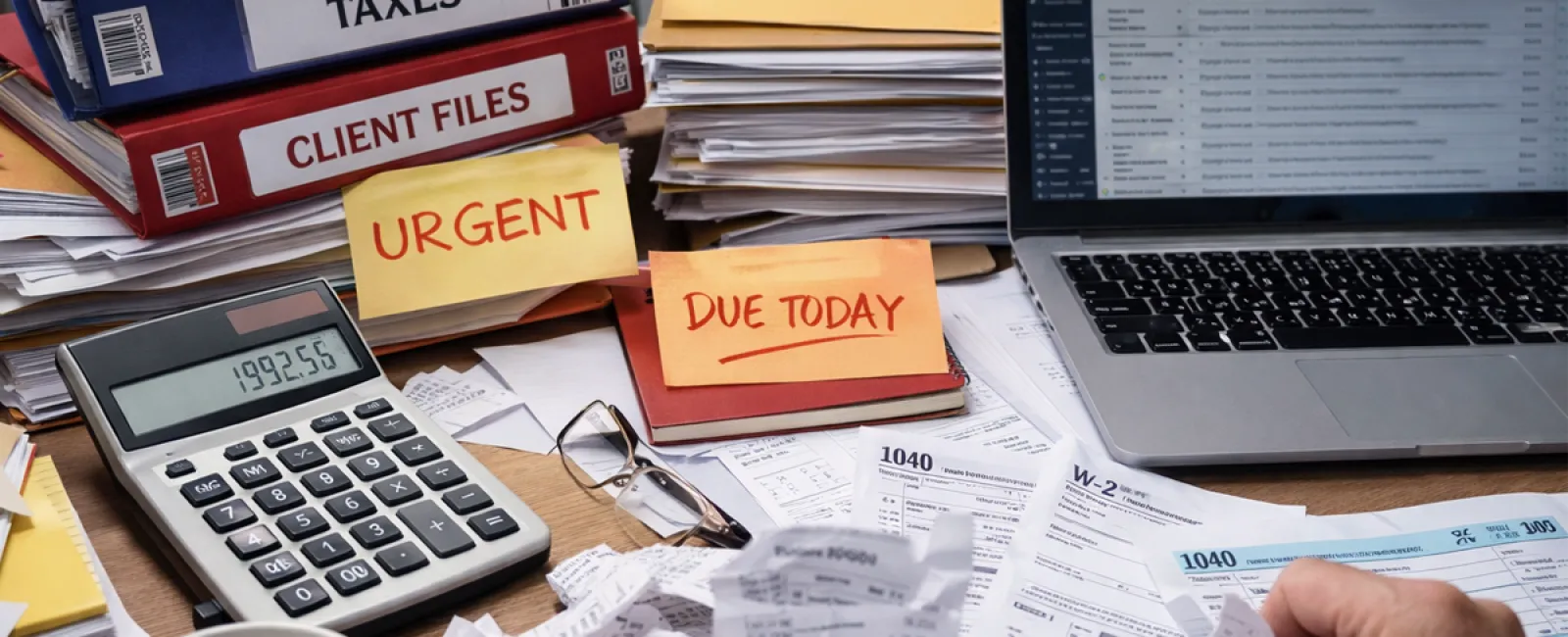
March is here.
Your accountant is overwhelmed, your bookkeeper is racing against time, and deadlines are closing in fast. Emails flood in relentlessly.
Everyone is heads-down, just trying to survive the busy month.
This scenario is familiar.
But hackers know it too.
Security experts consistently report a major surge in phishing attacks during tax season, with March experiencing about a 28% rise in tax-related scam emails compared to slower periods. These emails don't scream danger; they cleverly blend into routine business communications during peak stress.
This is no accident.
This is strategic timing.
Here's what lies ahead and four straightforward steps to protect your business from becoming an easy prey.
The Strain on Your Supply Chain
Here's what often goes unnoticed:
Hackers don't just target accounting firms directly.
They prey on the disarray surrounding them.
During tax season:
- Clients hurriedly send sensitive documents
- Employees skip critical verifications to keep up with workload
- "Just send it" replaces usual caution in communication
- Verification steps get bypassed due to overwhelming demands
The entire process accelerates.
And quick decisions lead to errors.
Hackers don't target business as usual—they focus on where the rush breeds mistakes.
March is exactly that time.
What These Cyber Attacks Look Like
This isn't fiction.
It's an email crafted to appear indistinguishable from others in your inbox.
- A message from "your accountant" requesting W-2s to be resent due to an error
- A vendor email notifying a change in bank information needing an update
- A DocuSign prompt demanding a tax document signature "today"
- An urgent message from "your CEO" traveling urgently requiring immediate help
These emails don't raise suspicion.
They mimic everyday business communications in March.
That's how they succeed.
Why Busy Professionals Fall Victim
This isn't about negligence.
It's about being human.
When emails pile up and deadlines loom, people skim rather than read. They make assumptions and react swiftly.
Scammers exploit this behavior.
Their emails are built for someone racing through their day, missing subtle signs. They don't need recklessness - just urgency.
And in March, almost everyone moves fast.
Four Essential Steps to Avoid Easy Scam Targets
The good news is that you don't need high-end tech or a dedicated security team to minimize your risks.
Just adopting a few mindful habits during this hectic season can make a big difference.
1. Confirm Payment Changes by Phone
When you receive an email about updated vendor bank details, don't reply directly.
Instead, call a trusted number you already have on file to verify.
This simple habit prevents some of the most costly scams in business.
2. Pause Before Sharing Sensitive Data
Urgency should trigger caution, not haste.
If someone demands W-2s, tax forms, or financial files "immediately," pause to validate.
Genuine requests tolerate a short delay; scammers won't.
3. Verify Urgent Requests Through Another Channel
For urgent emails, double-check via a quick call, text, or internal messaging.
This step can stop costly mistakes before they happen.
True urgency withstands a brief verification; fraudulent urgency does not.
4. Alert Your Team to Stay Vigilant
Remind your team during tax season to be especially cautious.
Encourage them to slow down, double-check, and ask questions if something seems off.
This simple mindset shift saves a lot of trouble later.
Key Takeaway
Tax season is stressful enough — avoid adding a security breach to the list.
The scams emerging now are not sophisticated, just well-timed.
They capitalize on rushed decisions, assumptions, and the pressure to push through March.
You don't need a complete system overhaul.
Simply take moments to slow down and verify urgent requests.
Often, that's enough.
Quick Check for Busy Season Readiness
Your business may already follow strong habits—and if so, fantastic.
But if tax season often pushes your team into reactive mode or uncertain handling of urgent requests, consider a complimentary Discovery Call sanity check.
No pressure, no gimmicks. Just an honest review of small habit changes that can prevent major headaches this tax season.
If this advice fits your business, feel free to share it with someone who might benefit.
Click here or give us a call at 832-536-9012 to schedule your free Discovery Call.


